Our Story | Why we built REplace for renewable M&A
From inside renewable M&A to a purpose-built intelligence platform: the story of how REplace turns fragmented queue data into faster, sharper acquisition decisions.
Our Journey
Built from the inside of renewable M&A.
Alan and Matias, co-founders of REplace
The Beginning
REplace emerged from experiencing the challenges of renewable M&A first hand.
Before REplace existed, Matias spent years inside renewable energy development, evaluating projects across multiple markets, advancing sites, negotiating PPAs, and working through the same processes most teams in this industry know well.
In one case, this meant spending more than 18 months advancing a single project. Matias negotiated the PPA, worked closely with lawyers, and invested significant time and capital to move the project forward. Eventually, the project failed - months of internal focus, legal effort, and capital were spent on a project that never had a realistic path to construction, at the expense of opportunities that did.
What stood out was how often this pattern repeated across the market. Strong teams were consistently investing significant time and capital into projects that were never going to move forward, and the industry had simply learned to accept this as normal.
Where We Started
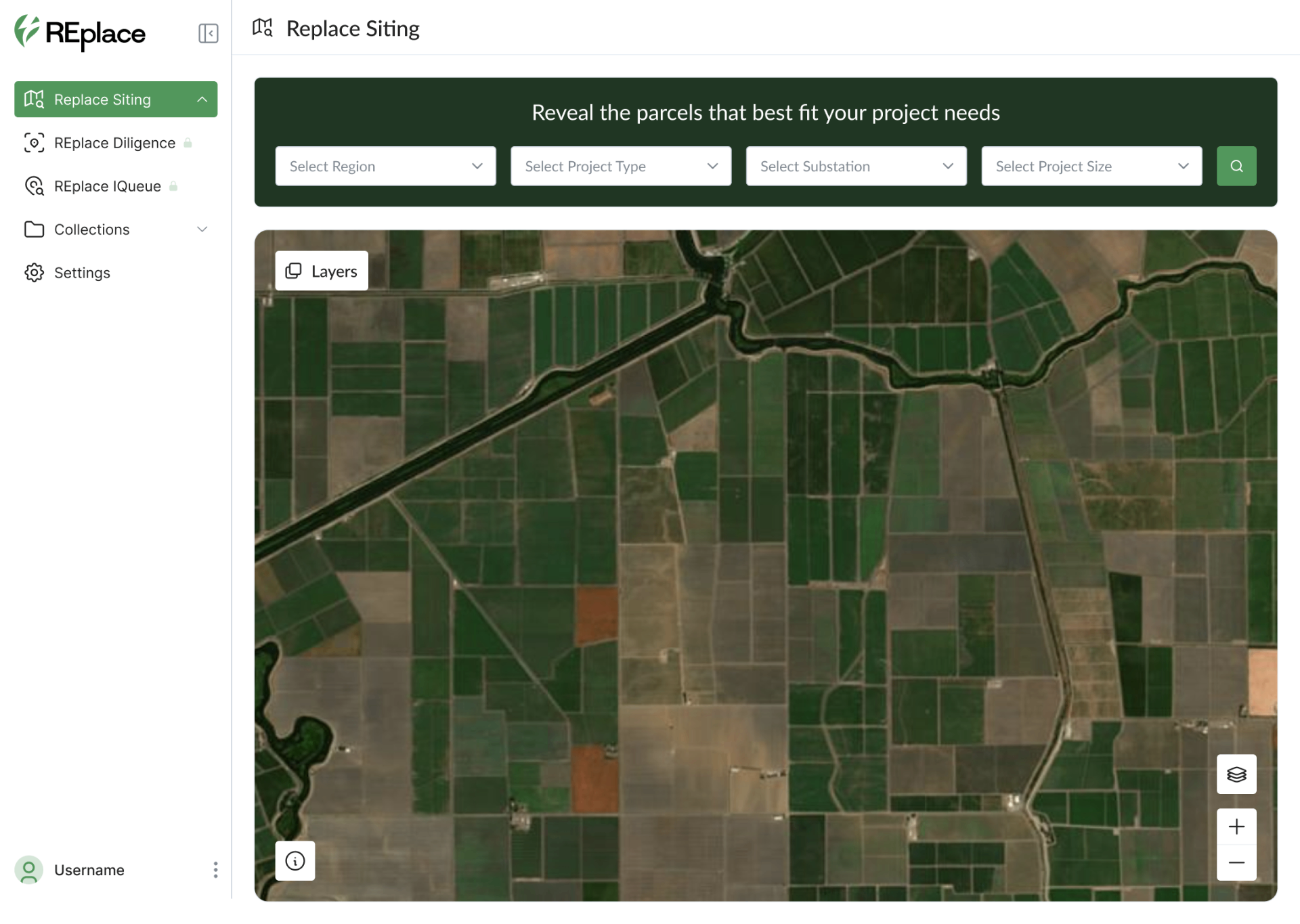
We first focused on land and site viability factors, helping developers surface constraints earlier using geospatial analysis and structured assessment.
REplace Siting platform showing geospatial parcel analysis
As more teams began using the product, we started to hear a consistent message: while siting mattered, there was a greater need for better M&A intelligence as bottlenecks kept appearing too late in the lifecycle, particularly for teams involved in acquisitions and portfolio decisions.
After building a strong reputation for our siting technology across international markets, we made a deliberate decision to focus on the M&A intelligence gap in the US specifically, where timing pressure, policy shifts, and queue congestion had made this problem impossible to ignore.
What We Built
We realized the challenge was systemic and required an approach grounded in systems design. That perspective came naturally from how we - Alan and Matias - worked together.
During one ski trip, after spending the day talking through recent deals and projects that had stalled or failed, we stepped back and compared notes. We realized many of the constraints that ultimately killed deals were not visible when looking at sites or projects in isolation. The problem wasn't exactly missing data points, but missing context.
This is where Alan's background mattered a lot. He had spent years building and scaling complex software systems where reliability, security, and traceability were non-negotiable. He was used to designing architectures that could absorb messy inputs, handle edge cases, and remain dependable.
Instead of reacting to individual deals, we would set out to give teams a clear view of the U.S. interconnection queue as a whole. By bringing together grid, permitting, land, ownership, and market context into a single integrated view, we believed we could support more grounded decision making earlier in the diligence process.
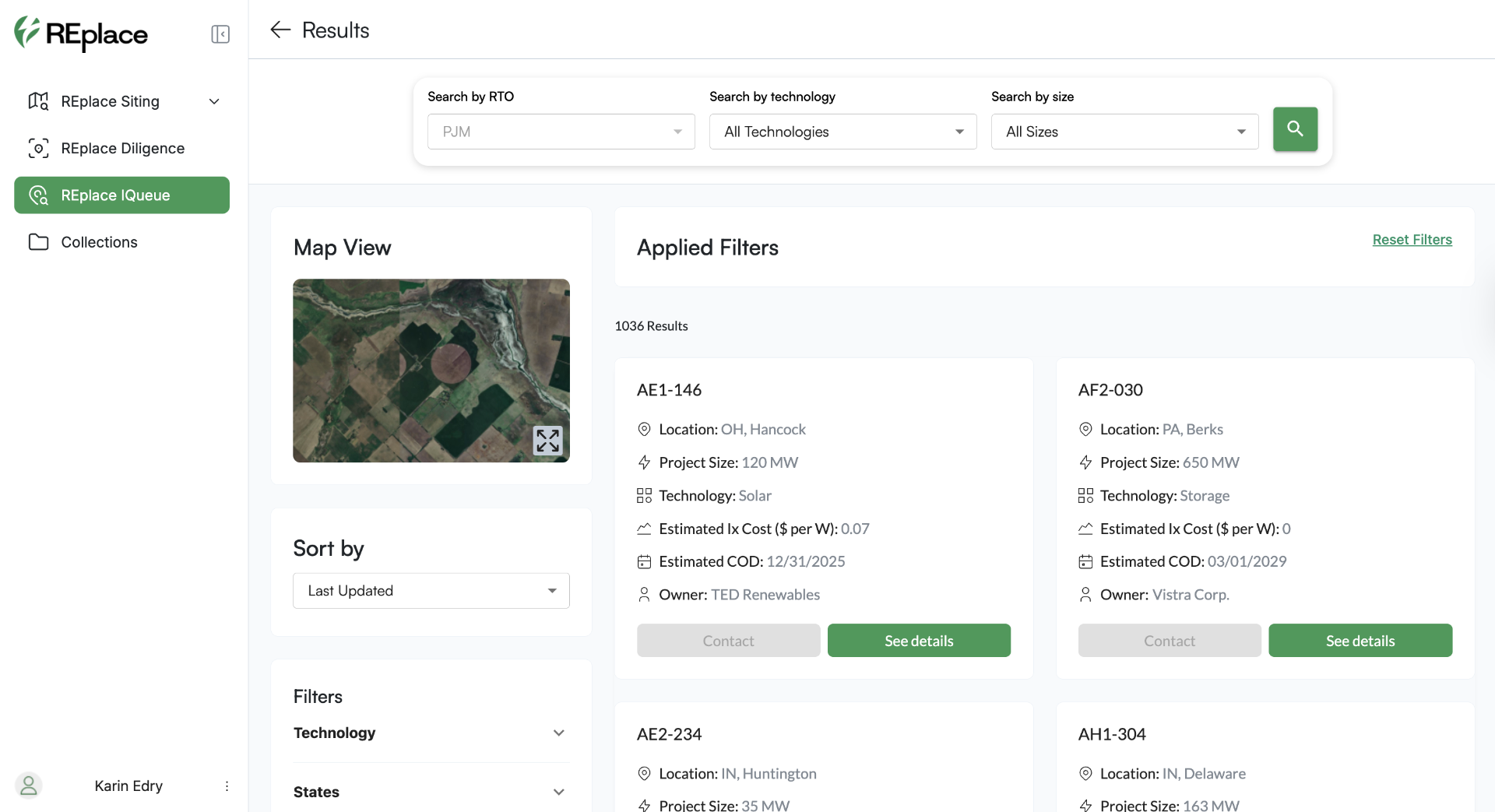
And so, iQueue was born.
iQueue platform showing interconnection queue search results
Where We Are Today
Since launching iQueue, REplace has gained early traction with renewable energy developers, investors, and acquisition teams navigating an increasingly competitive M&A landscape.
Today, REplace is used by developers, investors, and acquisition teams navigating a market that is moving faster and becoming more competitive every year. We're moving with urgency and we expect to adjust and improve as the market changes.
A core outcome of REplace is enabling earlier conviction, so teams can concentrate resources on the opportunities that will be most likely to move forward and progress.
- Matias & Alan